Sunday, November 6, 2011

On shaky ground


Pic: Kurt Langer

Good Weekend
Sydney Morning Herald
August 20, 2011

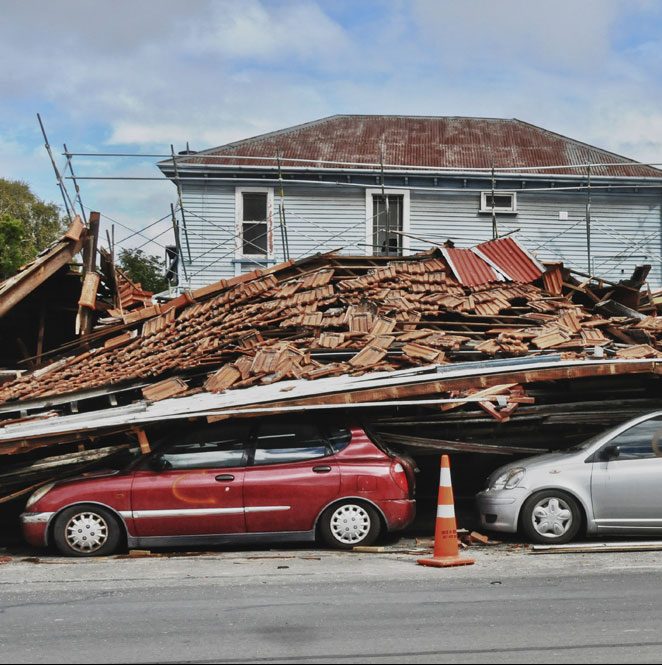
On February 22, the city of Christchurch was rocked by an earthquake that killed 181 people. Erin O’Dwyer talks to five survivors as they try to come to terms with that tragic day.

An earthquake in Christchurch comes with a roar or a shudder. It rolls in across the plains from the Greendale Fault. Or it thunders up out of the ground, right below the city. It’s much like the rumble in the belly of a giant, fast asleep and snoring, deep below the earth.Type rest of the post here

It’s been six months since New Zealand’s second-deadliest earthquake, a magnitude 6.3 aftershock that killed 181 people. There have been more than 7000 tremors since the initial 7.1 quake in September, including a series of big shocks in mid-June that set already jangled nerves on edge.

Each new quake increases the chance of more aftershocks. There’s a 23 per cent chance of another big shake within the next year.

People live in a state of perpetual anxiety. There is growing anger, too. Most of the CBD remains cordoned off and locals are frustrated that plans to rebuild the city – estimated by analysts to cost $NZ20-30 billion – are taking too long. About 1000 buildings are due to be demolished, many of them heritage-listed, and it is expected that demolition work will not be complete until Christmas next year. Some suburbs will never be rebuilt, and some parts of the central city look as if time stopped on February 22.

Bricks from collapsed walls are scattered on the road. Curtains flap from the open windows of abandoned apartments. There are empty chairs at empty tables, in cafes and bars that once buzzed with life.

Secondary issues have emerged, too, with many businesses closed and thousands of people out of work. About 12,000 more people (from a population of about 390,000) are unemployed than at this time last year. An initial relief subsidy paid to more than 65,000 people ended in April. A second payout with stricter conditions ended in May.

By then, the first redundancies had been announced – 172 council workers, then 100 hotel staff. Next, teachers and tourism operators were told they did not have jobs. In the end, few families were left untouched. Many – perhaps as many as 24,000 – have moved away to find work or stay with relatives and friends. Homes that still stand empty have been looted. Relationships are breaking down and police say domestic violence is on the rise. Everywhere ordinary people are hurting.

Yet the mood remains remarkably upbeat in Christchurch. Everyone counts themselves lucky in some small way. Lucky to have a place to stay, lucky to be alive.


Read more!

Tuesday, June 14, 2011

The Organic Choice


Pic: Erin O'Dwyer

Australian Yoga Journal
July 2011

Going organic may be just what the doctor ordered, writes Erin O'Dwyer.

A CONVERSATION with Sheridan Hammond is as invigorating as slamming down an ice-cold organic smoothie loaded with bananas, mangoes and fresh-picked leafy greens. Which is exactly what Hammond – a yogic surfer and organic entrepreneur from the south west coast of Western Australia – had for breakfast this morning.
“Organic meant better so I started saying I only want to put organic food in my system," he says. "Then once you try it, you don’t go back.”

Certified organic means food that is produced without synthetic chemicals, fertilizers or pesticides. Organic food is also non-GM, ensures humane treatment of animals and is sustainably farmed.

Plus it tastes better – a key factor in the minds of the almost two in three Australians who include organic in their shopping trolley.

We have little evidence as to whether eating an organic diet can reduce our exposure to the pesticides and insecticides that in large doses are linked to cancer, allergies, depression, infertility and other chronic illness. But for an increasing numbers of Australians, going organic makes logical sense.


Read more in the July issue of Australian Yoga Journal www.yogajournal.com.au


Read more!

Saturday, May 14, 2011

A bit weird and getting paid for it


Pic: John Tsiavis
The Sun-Herald
Sunday May 15

Comic chameleon Chris Lilley tells Erin O'Dwyer how his family view his career - and what motivates him to continually challenge himself.

In a quiet corner of a St Kilda pub, Chris Lilley is pondering his own comic genius. Self-reflection is not something that comes naturally to the humble and quietly spoken 36-year-old.

"It's hard because when I come to doing interviews I have to analyse it and break it down," says the actor whose alter egos have more friends on MySpace than he does.

"But I'm just doing what I feel is right at the time. It's a creative thing, it's like a painting, I make choices instinctively and then I have to look back about it and think, 'Oh, what was that about?' "

It's the question that begs to be asked when it comes to Lilley. Perhaps because, like all the best comedians, he is so skilful at making us cringe, even as we fall about laughing. Surely, he must be trying to tell us something.

Read more: http://www.smh.com.au/entertainment/tv-and-radio/a-bit-weird-and-getting-paid-for-it-20110514-1en2c.html#ixzz1MMOern8V


Read more!

Sunday, October 3, 2010

Future Heros


Photo: Frances Mocnik

Australian Geographic
Issue 100, Oct-Dec 2010

T’S 9.15 ON a mid-summer Sunday morning and 800
children are wriggling on Coogee Beach. Coogee Minnows captain Tass Karozis
is recounting a story of how two Nippers – budding surf
lifesavers – saved a man’s life in northern NSW during the
recent school holidays.

“I emerged face down and began to go under again,” Tass
reads from an email over the loudspeaker. “Jackson and Lachlan
swam to my aid, lifted my head out of the water and swam me
towards the rock ledge. I was unconscious at the time.”

It’s an inspiring tale of courage and quick thinking.
“I’ve got goosebumps,” says father-of-two Gareth Jones. “What a fantastic thing to have done.”

The weather is overcast and inky seaweed is clumped along
the high-tide line, but the crush of tourists won’t be deterred.
Neither will the volunteer surf patrol assigned to duty from the
local Surf Life Saving Australia (SLSA) club grown-up ranks.

Read more in the current issue of Australian Geographic


Read more!

Call of the Wild


Photo: Fairfax Images

Good Weekend
Sydney Morning Herald
2 October 2010

Pest, menace, killer ... for an animal so little understood, the dingo has a bad reputation. But new research is showing how man and Australia's wild dog can more happily coexist. Erin O'Dwyer tracks the mystery on our doorstep.

The greater blue mountains world heritage area rises soft and blurry beyond the Sydney metropolis. On a clear day, you can see the city from its ancient sandstone ramparts and hear aeroplanes banking. How wild can it really be?

Very wild indeed. Its southern section (an area of 220,000 hectares that has the Great Western Highway as its northern border) is home to about 60 packs of dingoes. Ground-breaking re­search by University of Western Sydney researcher Brad Purcell reveals that it is the largest dingo population so close to civilisation.

Read more in the Good Weekend


Read more!

Thursday, August 26, 2010


Photo: Erin O'Dwyer
The Sun Herald
Sunday August 15

People from many cultures — Indian, African, Chinese, European — live harmoniously in Mauritius, writes Erin O'Dwyer.

THE Australian tourist in the hotel lobby skids across the white marble tiles towards me. He has a boxer's nose and wears a rumpled suit that pulls across his middle.

"Quick," he urges with a giddy grin. "What was that tip we were given at dinner last night?"

A svelte French woman in diamonds and designer drainpipes looks up over her Jackie O's. A smooth-skinned African man sitting in a silk-covered armchair peers over his copy of The Times. I shrug and shrink behind my airport novel.

"Come on, you know," he presses. "The one with the Australian jockey. The concierge wants to know."An hour later, we arrive at the Mauritius Turf Club and my friend finds himself in more familiar territory. Punters claw at the perimeter fence like fans at a rock concert. Cars choke the side streets and policemen in khaki march along ribboned containment lines.

I am wearing my best dress - a flowery pink frock - but I've been led astray by the imaginary dress code. In Mauritius, anything goes. There are men in thongs and T-shirts and jeans; men in what they wore the night before. The women are little better: leggings, jerseys and more thongs. They hug the track in crowds 10-deep, clutching little scraps of paper and leaping on the trodden grass. "Anti-Freeze! Anti-Freeze!" they yell, as the winner crosses the line.

We've arrived in time to see the dying seconds of the fifth race and already the Phoenix beer is flowing. My friend finds the bookie's counter, then slaps down a salmon-coloured note on No. 3. I bet the same, 100 rupees, on a pretty horse named Advocacy. I like the yellow bridle.

After two turns of the track, my friend pockets his winnings. I take the wooden spoon.

"Out of a field of five, three were bandaged," he explains. "The others ran one, two. My shout."

But rounds barely matter when you are in the VIP box at the Champ de Mars - the second-oldest racecourse in the world - in the Mauritian capital, Port Louis. The track is the oldest in the southern hemisphere, established in 1812 by the British, two years after they conquered the French.

Still today, the stands are tribute to colonial architecture, though sharp eyes will spot the sleeker 1930s and 1950s-era construction. Low timber ceilings give way to curvaceous concrete balconies and timber shutters are painted in creams and reds. Weeping figs shade the members' area and only the crowd destroys the air of quiet cool.

Inside, it's a better class of punter; however, it's the cultural farrago I notice first. Sri Lankan women in silk saris, African women in leopard-print minis and Chinese men in bifocals poring over form guides. Along the gangway, pudgy Australian jockeys with sun-busted lips mill beside besuited Indian gentlemen dripping in gold. The entire scene would not be out of place in a Bollywood movie.

It's the same caper every Saturday. "Mauritians are passionate about their horse racing," says our host, Raj, a genteel Mauritian of Indian descent. "There are probably 10,000 people here today and it's not even a classic. On big days, we can get 50,000."

In an island nation famous for its glamorous beach resorts, it is that cultural curry pot of town life that makes for a rare treat for travellers. On the way here, we have meandered through sooty villages squashed between sugar-cane fields and purple volcanic peaks. Houses are half-finished, square and concrete affairs, with lines of wet washing flapping beneath mango trees. Every main drag has a Chinese shophouse splashed with red, a mosque painted jade green and an intricate Tamil temple, with their gods and goddesses bleached pink by the sun. There are kebab shops, corner shops and barber shops. Roosters strut on the footpaths. Packs of roughed-up dogs have had too many pups.

Mauritius is still a poor country. Most of the 1.3 million inhabitants live in the island's interior, where the main industries are sugar and textiles. Cane workers on push bikes careen along potholed highways, bundles of stalks lashed to their backs. Faded French flags flap in fields of pineapples. Most people still grow their own vegetables.

At every turn on the highway, a ruined stone smokestack rises from the cane fields. These are the remnants of 250 sugar mills that once operated on the island. Now, there are five mega-mills and a rum distillery that sells fruit rums to tourists.

All cultures, be they Indian, African, Chinese or European, live harmoniously in Mauritius. Political affairs have been smooth and stable since independence was achieved in 1968. It's evident at the races, in the villages, but most especially in the conversation of locals.

"Where do you come from?" I ask a handsome European with the whiff of Paris about him. "Mauritius," he replies with a smile.

Perhaps the only point of contention in the island nation, lying off the east coast of Africa, is how best to preserve colonial heritage.

In Port Louis, we lunch at the country's first gastropub, Lambic, established a year ago by a group of friends. The converted timber house once belonged to one friend's grandparents and is believed to have been built before the British arrived.

"We have no date of construction but there is a photo of the house taken in 1905 and the mango tree out the front is almost as big as it is now," says self-proclaimed beer hunter Oscar Olsen.

Lambic has 140 beers and 43 whiskeys and a selection of tea from Sri Lanka, Morocco and the Himalayas. The breakfast, lunch and dinner menus feature sauces and meats rich with beer-infused flavours.

"The idea was to make me happy, not rich," Olsen says of his venture. "If I wanted to be rich

I would have knocked down this building and built a big high-rise tower. But we think that if everyone destroys what is original here, there will be nothing left."

Port Louis is a case in point. Glass-fronted skyscrapers squeeze between faceless office blocks. Bungalows with low verandahs converse with the Doric columns of government buildings. Along back streets, the

iron roofs of old cottages sprout papaya trees like hairs from an old woman's face.

It's all absolutely charming. Look east and you face the mountains. Swing west and you're headed for the sparkling port, where catamarans dart between the navy vessels hunkered on the horizon.

The markets are in the middle of town. The original green shophouses were destroyed by fire but the reconstruction stayed true to the heritage look - right down to the rats and pollution smut. Inside are rows of onions, potatoes and garlic - the only vegetables imported to the island. Outside, on street corners, hawkers sell everything from bike tyres to mosquito coils. Despite the crush,

I never feel unsafe. Mauritians are peaceful, friendly folk.

If what people want most in a holiday is good food, great beaches and a glimpse of local culture, then Mauritius has it all. Four and five-star resorts ring the island; the most popular crowded around the east-coast tourist village of Flic en Flac. Golf and snorkelling are island mainstays, though most resorts have a hectic schedule of activities - from archery and bocce to yoga and tai chi - and the spa is never far away, either.

To eat, it's fish done all ways. In less than a week, I have it sashimied, sushied, tatared, curried, pan fried, flame fried, baked, roasted and grilled. The highlight is the curried clams and sea urchins peppered with Tabasco and lime.

Little touches make Mauritian hospitality shine. Fruity highballs served with intricate frangipani garnishes; main meals served to the women first; and at the five-star

Le Touessrok, a restaurant called Barlen's has been named in honour of the maitre d' who worked there for 30 years.

Historically, Mauritius is a fascination, too. The rocky outcrop Le Morne, a UNESCO-listed peninsula that juts into the Indian Ocean on the island's south-west coast, is rumoured to be the most energetically charged location on the island. Legend has it that Le Morne was home to escaped slaves from India, Africa and Asia, who sheltered in the late 18th and early 19th century. Many hurled themselves off the sheer cliff face when they heard the British had defeated the French. Today, the luxurious Dinarobin Hotel is nestled in the shadow of Le Morne. The gravitas of Le Morne gives the resort a special spirit.

On our way to the races, we take in Pieter Both, another iconic peak, in the island's centre. It was named after a Dutch explorer who was shipwrecked off Mauritius in 1615. The mountain is shaped like Pinocchio's nose, with a giant rock balanced precariously on its point.

"Mauritian legend has it that the day the rock topples off, it will be the end of the world," says our excellent Mautourco guide, Carolyn. All the more reason to follow my friend back on the punt. We slap down a few more salmons on No. 2 but as the siren sounds, he leaps to his feet.

"No. 6," he shrieks, running to the bookie. "I can feel it in my waters."

Sure enough, No. 6 comes in first. My friend leaps to his feet, jiggling around like every other Mauritian in the stand. The Phoenix beer, even the French champagne, can wait. This is a photo moment.

The writer was a guest of Air Mauritius and the Mauritius Tourism Promotion Authority.


Read more!

Friday, May 28, 2010

Women of the veil


Photo: George Fetting
Australian Women's Weekly
June 2010

Sacred or oppressive? As Europe debates the banning of the burqa, Erin O’Dwyer talks to four Muslim Australian women about why they choose – or choose not to – wear the Islamic veil.

To some, Islamic veils are expressions of faith. To others, they are symbols of oppression. Either way, they continue to spark debate.

The latest controversy has flared in Europe, where first Belgium and, perhaps soon, France, will pass laws to stop Muslim women wearing the face-covering burqa or niqab in public.


The author of Belgium’s new law argued everyone in public must be recognisable in the interests of security and that the burqa clashed with the values of a free society, which respects everyone’s rights.

In July, the French National Assembly will debate a similar bill to prevent French Muslim women wearing any headscarf that also covers their face. President Nicolas Sarkozy says the burqa is an “affront to French values” and a denigration of women.

Muslim leaders in Europe have spoken out, saying women who choose to wear veils or headscarves will become social outcasts, trapped in their homes, if they’re banned.

“Today it’s the full-face veil, tomorrow the veil,” says Muslim Executive of Belgium spokeswoman Isabelle Praile.

Amnesty International described the ban as discriminatory and as a violation of women’s rights to freedom of expression and religion. “The Belgian move to ban full-face veils, the first in Europe, sets a dangerous precedent,” says spokesman John Dalhuisen.

The debate reached Australia when a Liberal Party senator controversially called for a ban on burqas after a thief wore one as a disguise. Yet other politicians distanced themselves from his position, saying Australia was a tolerant society, which should respect different religions and cultures.

Read the story of these four women in the June issue of The Weekly, out now with Rebecca Gibney on the cover.


Read more!